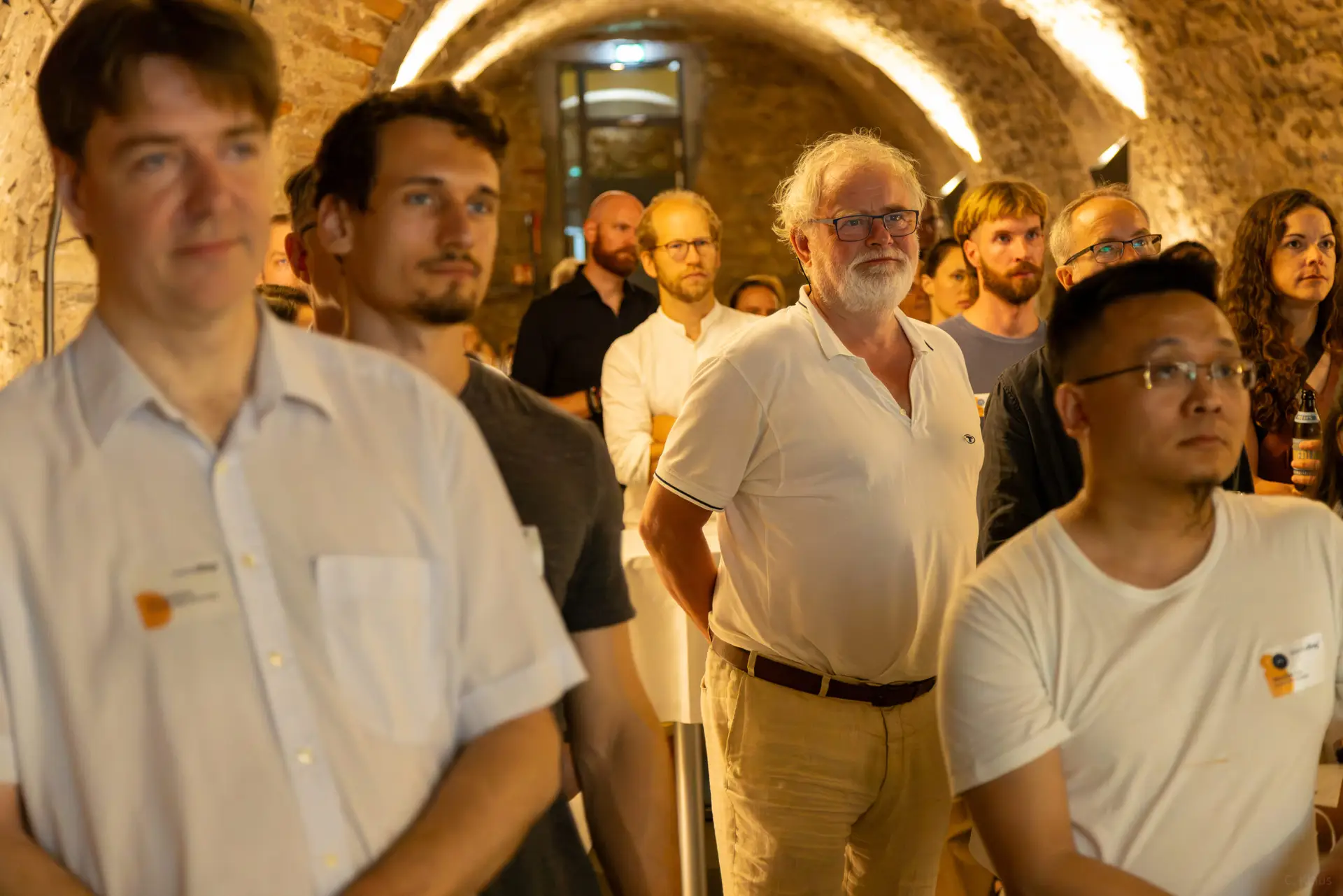
At the end of June, more than 100 participants from academia, clinical practice, industry and Baden-Württemberg’s innovation ecosystem gathered in Freiburg to mark the beginning of the second funding phase of nanodiag BW.
This kick-off did not feel like a typical new beginning. The trusting collaboration established during the first three-year funding phase was evident from the very first moment and made it easy for our new partners to become part of the discussions straight away. To me, this was the clearest sign that nanodiag BW has grown into far more than a research consortium. It has become a mature innovation network that is now taking the next step towards a sustainable innovation ecosystem.
Hanna Hasselblatt, Clustermanager nanodiag BW
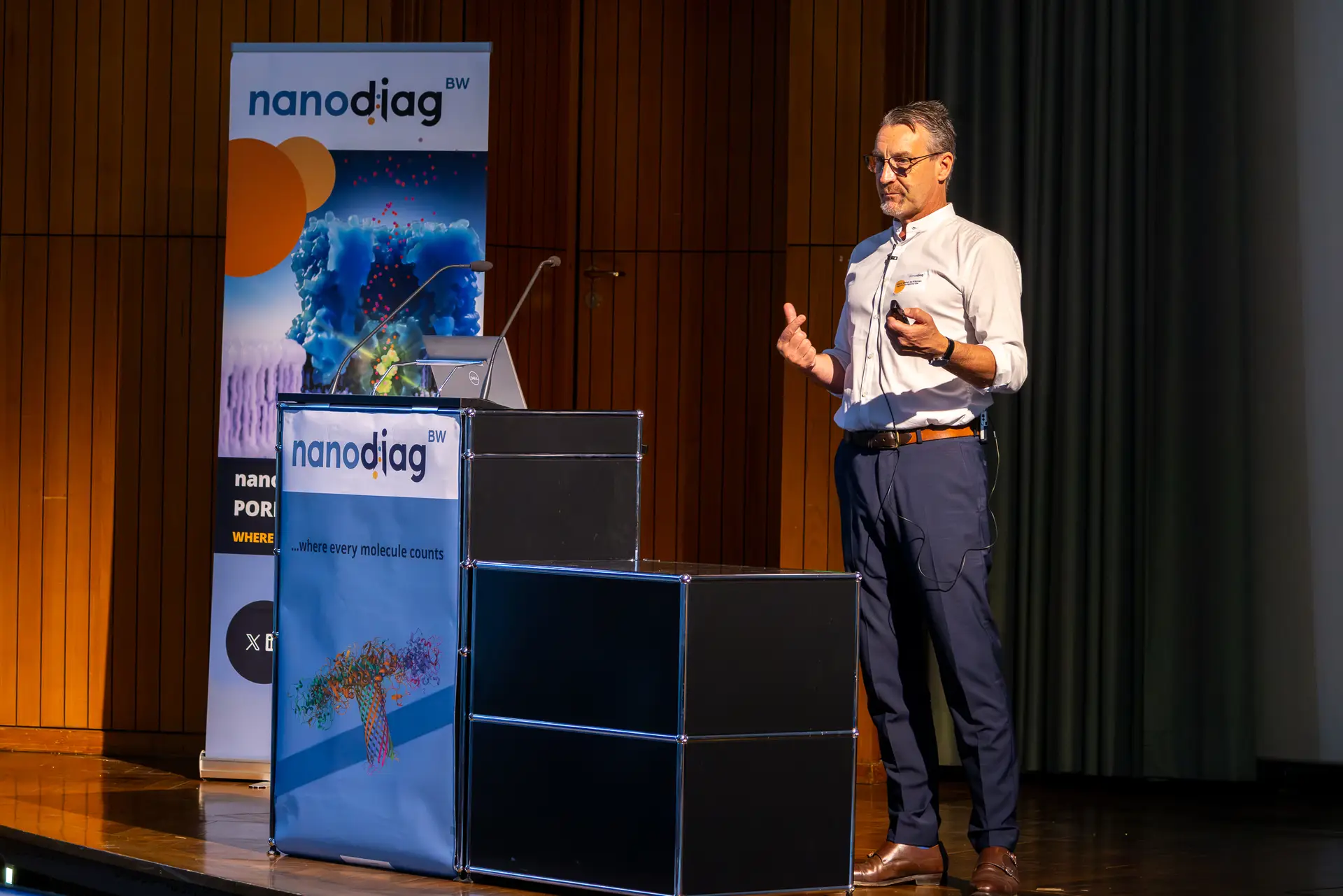
This collaborative spirit characterised the entire two-day meeting. The opening keynote by Dr. Christian Wellner (Roche Diagnostics) provided an impressive illustration of the enormous innovation and market potential of nanopore technology. Drawing on Roche’s many years of research and development, he demonstrated that while the journey from a promising technology to industrial application requires persistence, it is well worth the effort from the perspective of one of the world’s leading diagnostics companies.

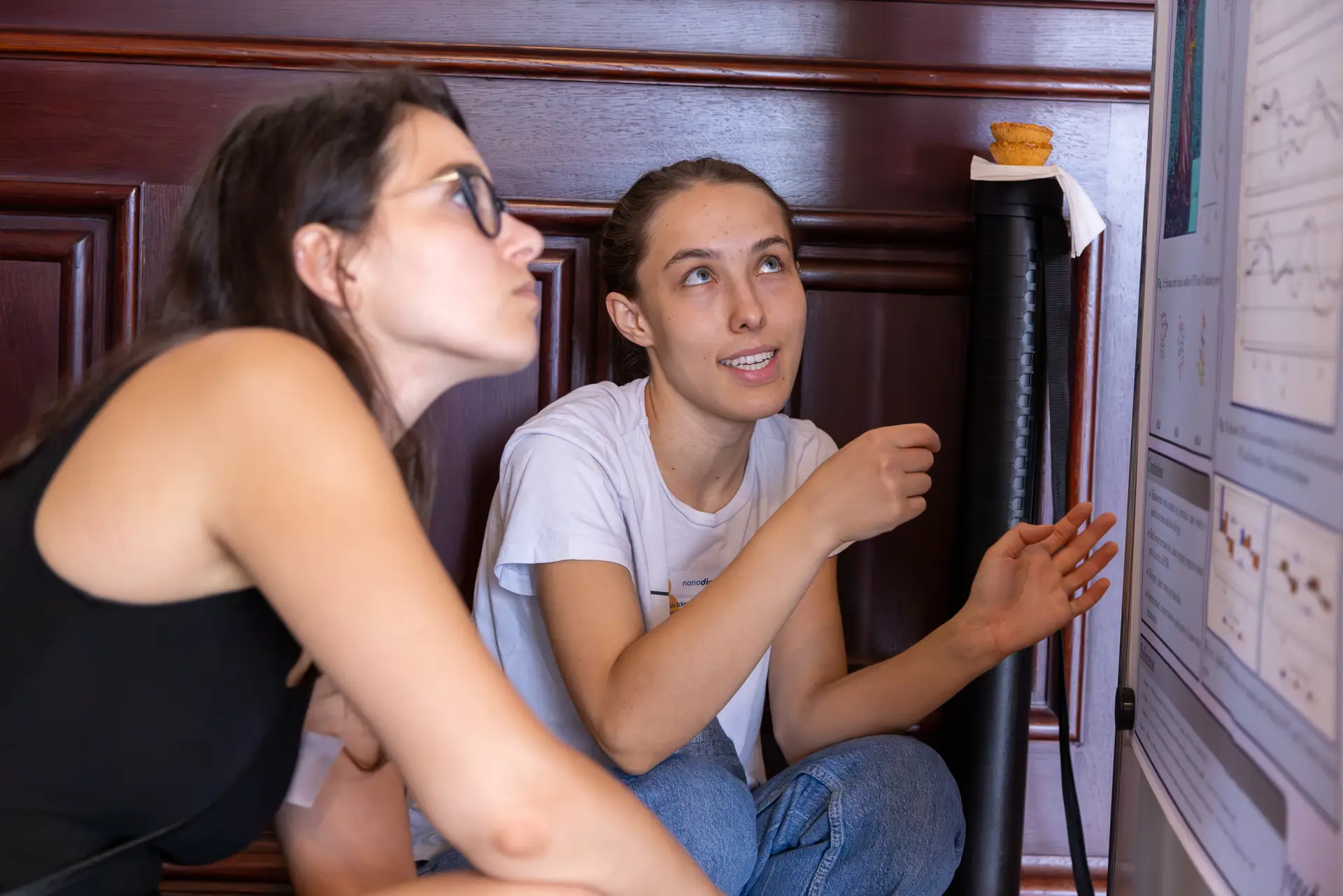
The scientific sessions focused on the technological objectives for the next three years. Equally valuable, however, were the discussions between sessions, the workshops and the poster presentations, all of which highlighted the strength of the cluster’s interdisciplinary collaboration. Many of the most promising ideas emerged not on stage, but during conversations before and after the programme itself.


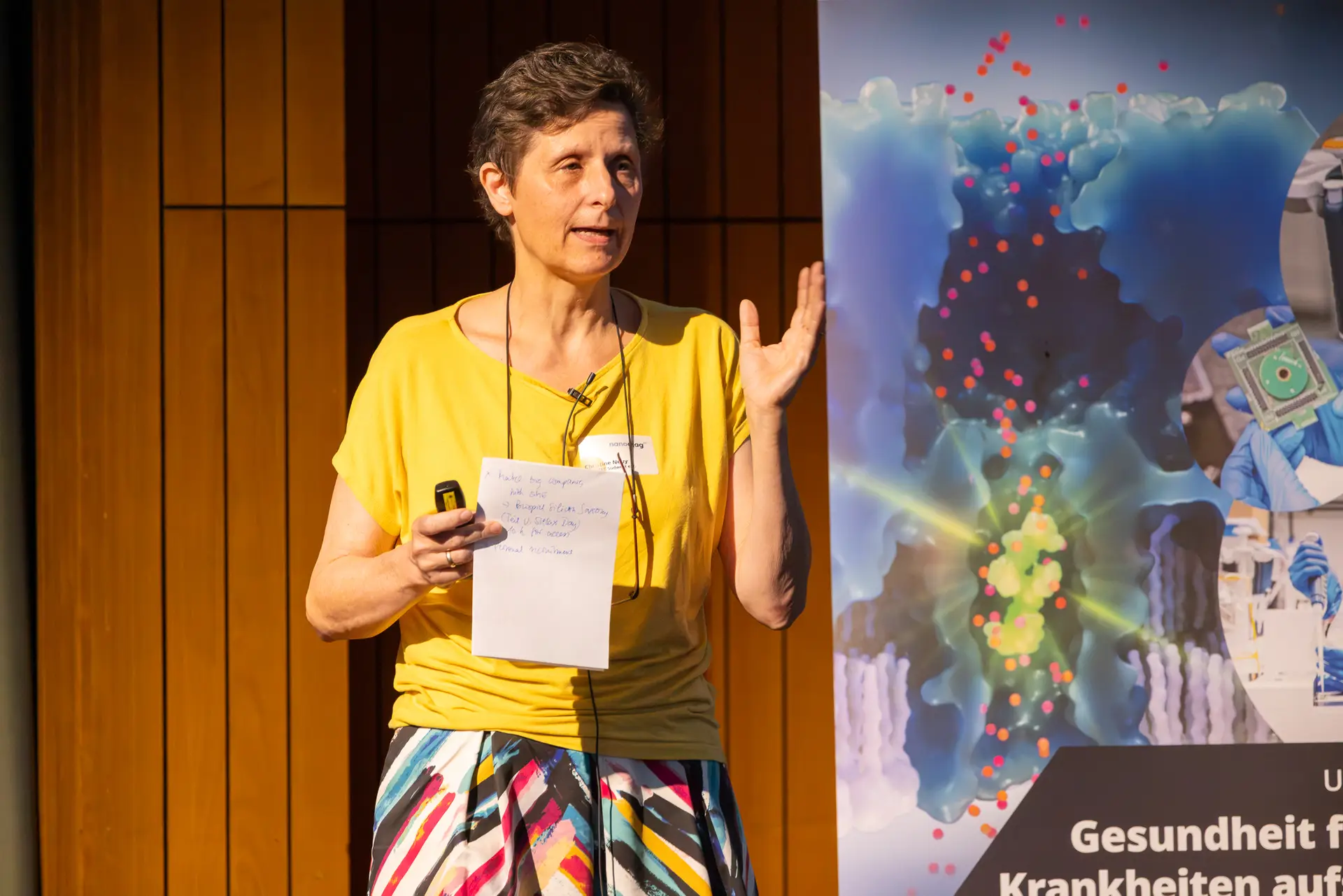
A major focus of the second day was the future development of the cluster. Dr. Gerd Meier zu Köcker, Head of the RegioClusterAgency Baden-Württemberg, shared valuable insights into sustainable cluster development, while Dr. Christine Neuy demonstrated, using microTEC Südwest as an example, how innovation networks can be successfully established and developed over the long term. Building on these presentations, participants discussed how nanodiag BW can continue to grow as an innovation network beyond the current funding period. During a World Café session, concrete ideas for achieving this long-term sustainability were developed and explored further.
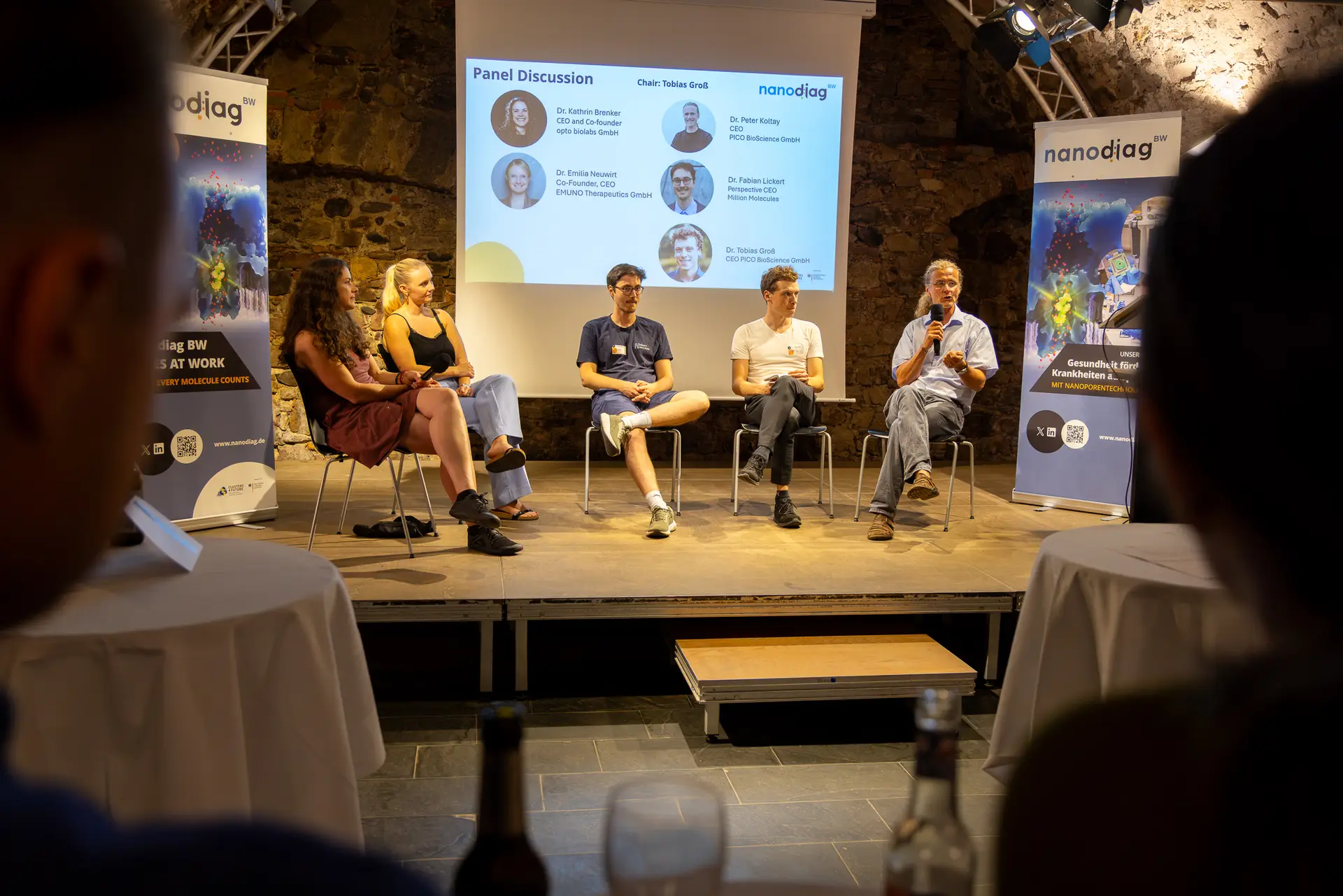
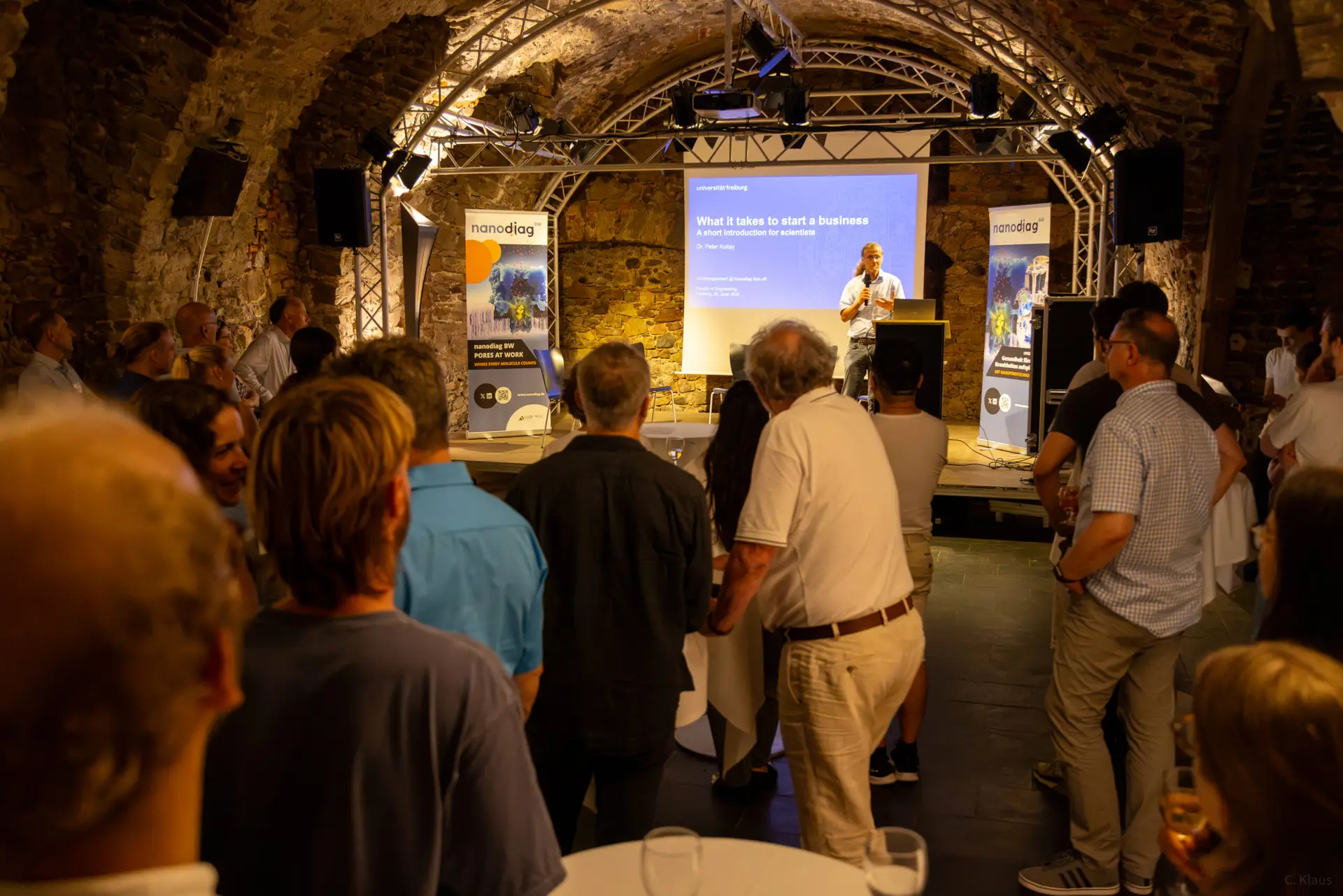
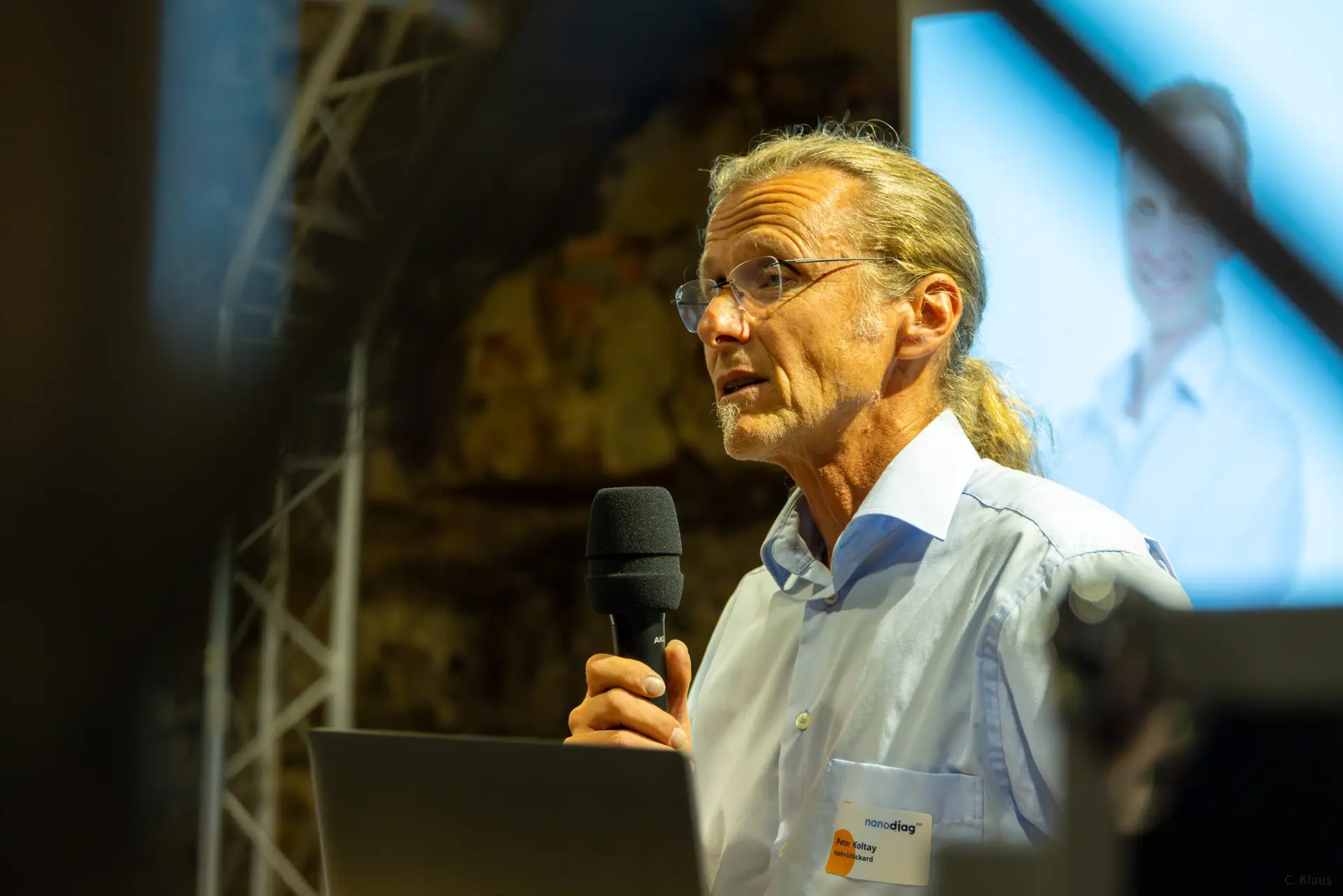
Another highlight was the Founders’ Evening. Moderated by Dr. Tobias Groß, Dr. Peter Koltay, Dr. Emilia Neuwirt, Kathrin Brenker and Fabian Lickert spoke openly about their experiences of building technology-based companies. Combining personal stories, practical advice and honest reflections on both successes and setbacks, the discussion proved to be as entertaining as it was insightful. The strong response from participants underlined that entrepreneurship will become an even more important focus within the cluster in the years ahead.
The two-day meeting demonstrated that, over the past three years, the cluster has built far more than a portfolio of collaborative research projects. It has created a resilient innovation network, united by a shared ambition to shape the future of molecular diagnostics. With this strong foundation, nanodiag BW now enters its second implementation phase.